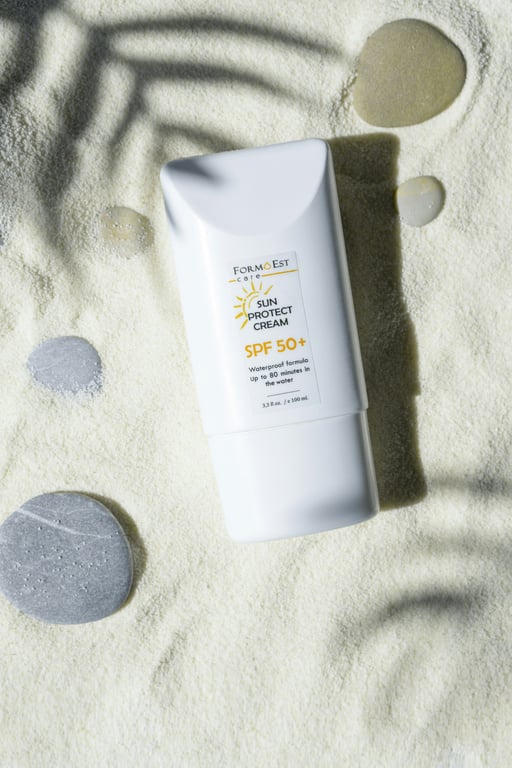
90% of visible skin ageing is UV damage
So it’s not your genetics or your skincare routine, it’s the west not caring to protect their skin. Look at natives in China, Japan, South Korea: they age far slower. There’s a whole stereotype on how they have good genetics, except that this youthfullness is far less observable amongst Asian raised in Europe / America. This indirectly implies that the social pressure to protect their skin from sun is what keeps them younger.
You HAVE to use SPF if you use acids
If you're using tret, aha/bha acids, you're literally destroying your skin: worse skin texture, faster aging, risk of breakouts.
Why the sun ages you
Accelerates collagen breakdown and visible ageing faster than any other single factor
So instead of just hopping on ghk-cu, why don’t you first protect the collagen you currently have?
Leads to uneven skin tone, hyperpigmentation
In other words, this is what contributes to your crusty skin texture overtime.
It's compounding
You haven’t protected your face with SPF from the sun your whole life, and the time is running out. I know it’s easy to only do habits that give you immediate results because monkey brain likey quick results, but monkey brain also don’t like regret about its past so start now.
How to Do It
Step by step
- Pick an SPF you'll actually wear every day: the best one is the most gentle one for now because I don’t know what sorts of horrors you’ve caused to your body. If it feels heavy or greasy, you won't use it consistently, and consistency is everything. If it smells good that’s a bonus but gentle SPFs tend to smell terrible
- Use enough for your full face and neck — THICK LAYER, alright? refer to my instagram video on how much to apply
- Apply every morning after washing your face — before you leave the house, before you check your phone, before anything else
- If you're out in direct sun for hours, reapply — sincerely I know it sounds tough but it’s still more comfortable than pinning ghk-cu daily
Rules
- SPF 30 minimum: it blocks about 97% of UVB. SPF 50 blocks 98%.
- Apply even on cloudy days: UVA penetrates clouds and glass. If there's daylight, there's UV
- Full face and neck, every time: the neck ages just as fast and most people forget it
- Don't wait for summer: UV is cumulative and year-round. This is a daily habit, not a seasonal one
What You'll Notice
Short-term
- More hydrated skin throughout the day (most modern SPFs double as moisturisers)
- You start noticing how often you used to skip it
Long-term
- More even skin tone so less redness, less hyperpigmentation
- Existing skincare products (retinol, vitamin C, niacinamide) actually get to do their job because UV isn't undoing them
- Slower visible ageing so fewer fine lines, less texture, better elasticity compared to unprotected skin
- If you're using tret or retinol at night, your results compound instead of cancelling out
The Science
Ultraviolet radiation — specifically UVA — penetrates deep into the dermis and breaks down collagen and elastin fibres. Unlike UVB (which causes sunburn), UVA damage is invisible day-to-day but accumulates over years into wrinkles, sagging, and hyperpigmentation.
Studies estimate that up to 90% of visible skin ageing in lighter skin tones is attributable to UV exposure, not intrinsic ageing. This is called photoageing, and it's the single largest modifiable factor in how your skin looks over time.
SPF works by absorbing or reflecting UV before it reaches your skin cells. SPF 30 filters approximately 97% of UVB radiation. The reason dermatologists universally recommend daily SPF as the #1 anti-ageing intervention — above retinoids, above antioxidants, above any procedure — is that no product can repair damage as effectively as SPF prevents it.
For anyone using retinoids (tretinoin, retinol, adapalene), daily SPF isn't optional — these ingredients increase photosensitivity by accelerating cell turnover, exposing newer, thinner skin to UV. Without SPF, retinoid use can paradoxically accelerate photoageing.
 Made with Bullet